AI Marketing Assistant
A store’s customer data sits in three tools, and turning it into a campaign means exporting, segmenting in a spreadsheet and writing every message by hand.
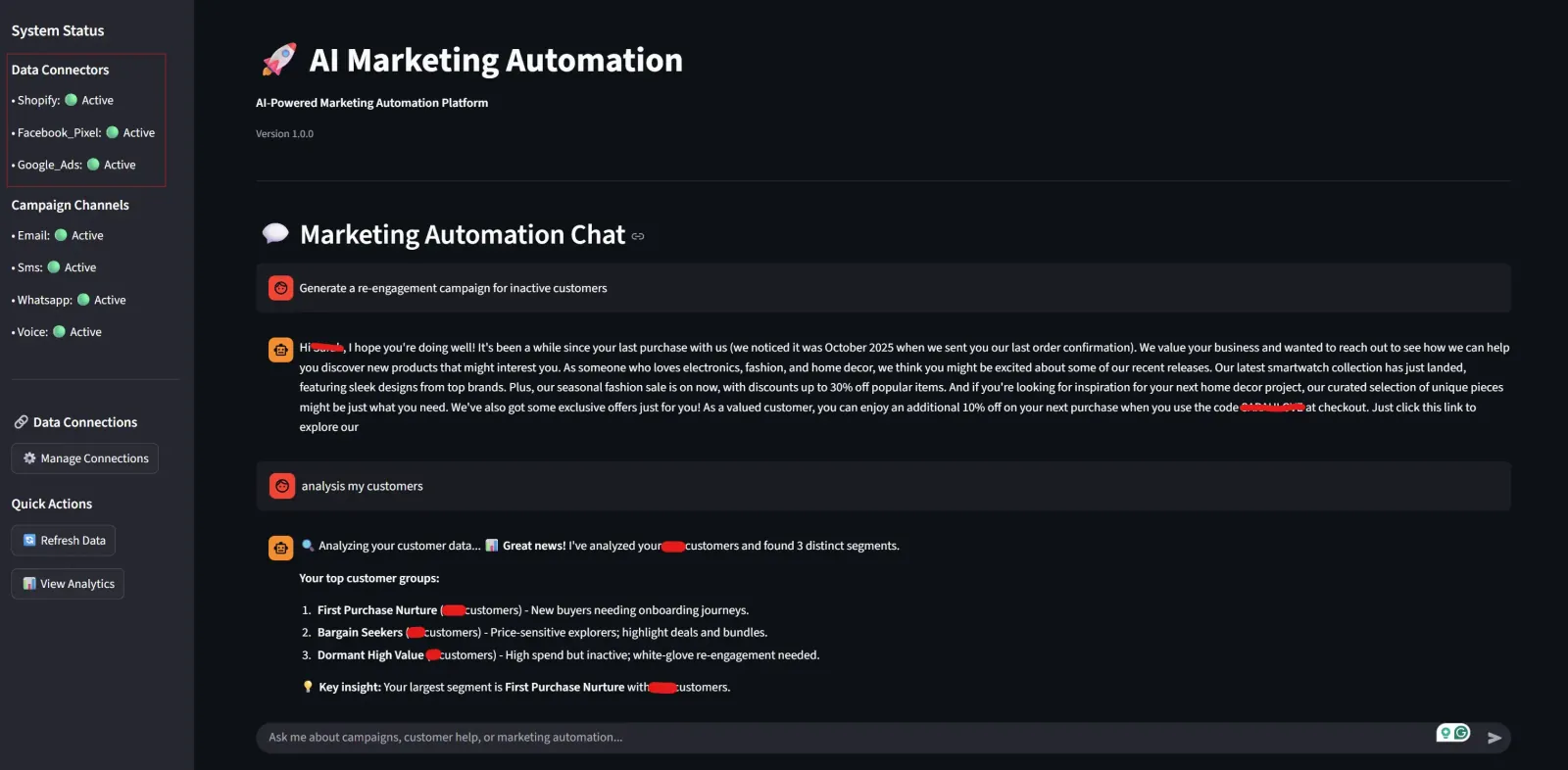
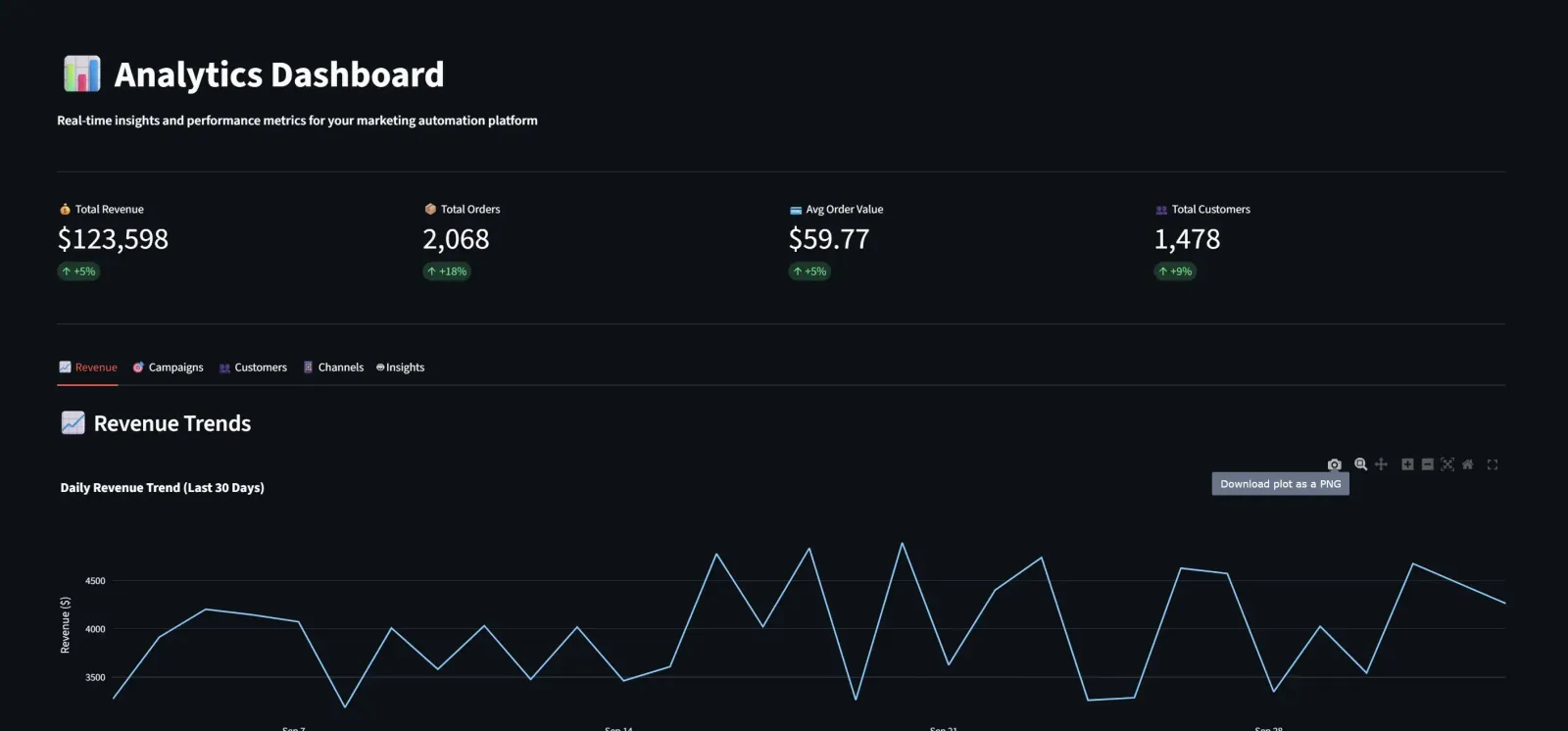
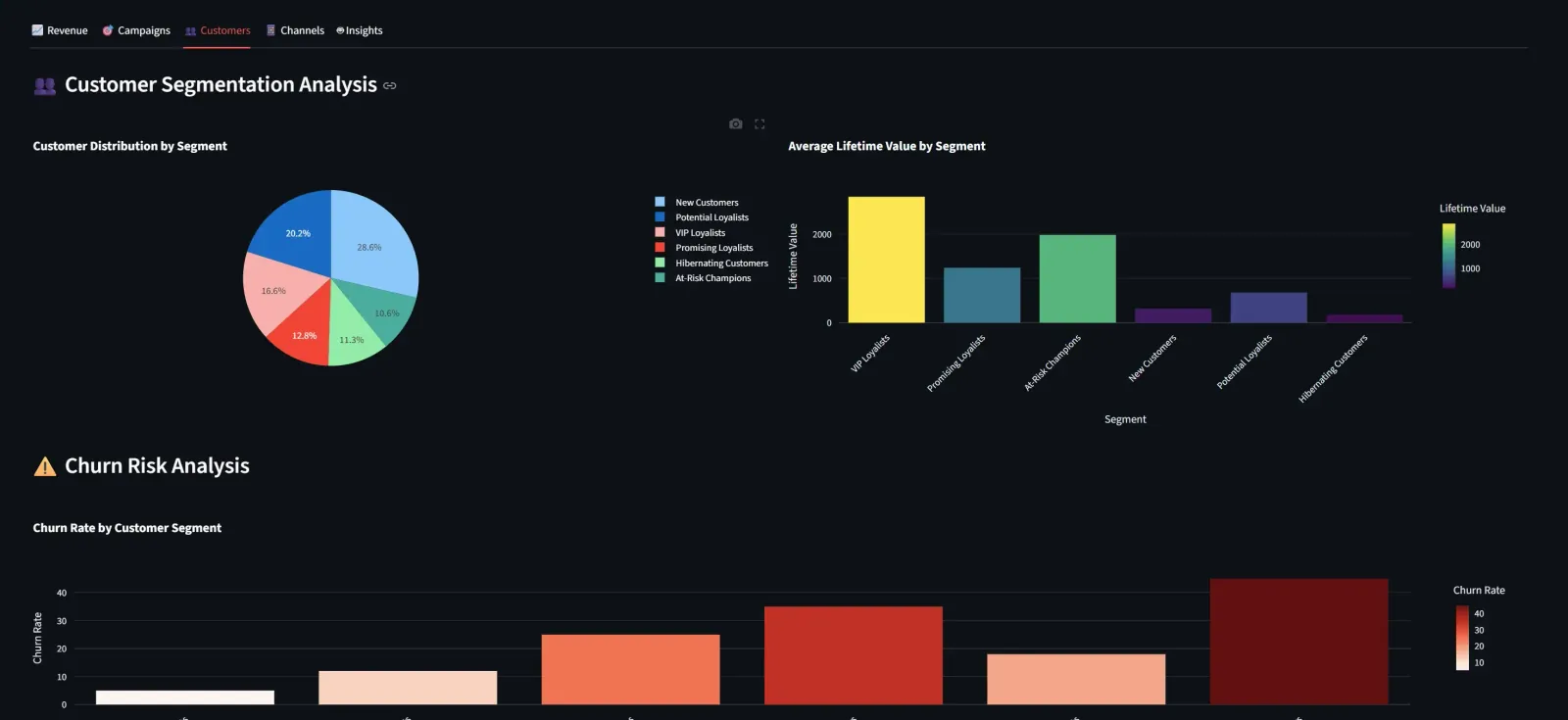
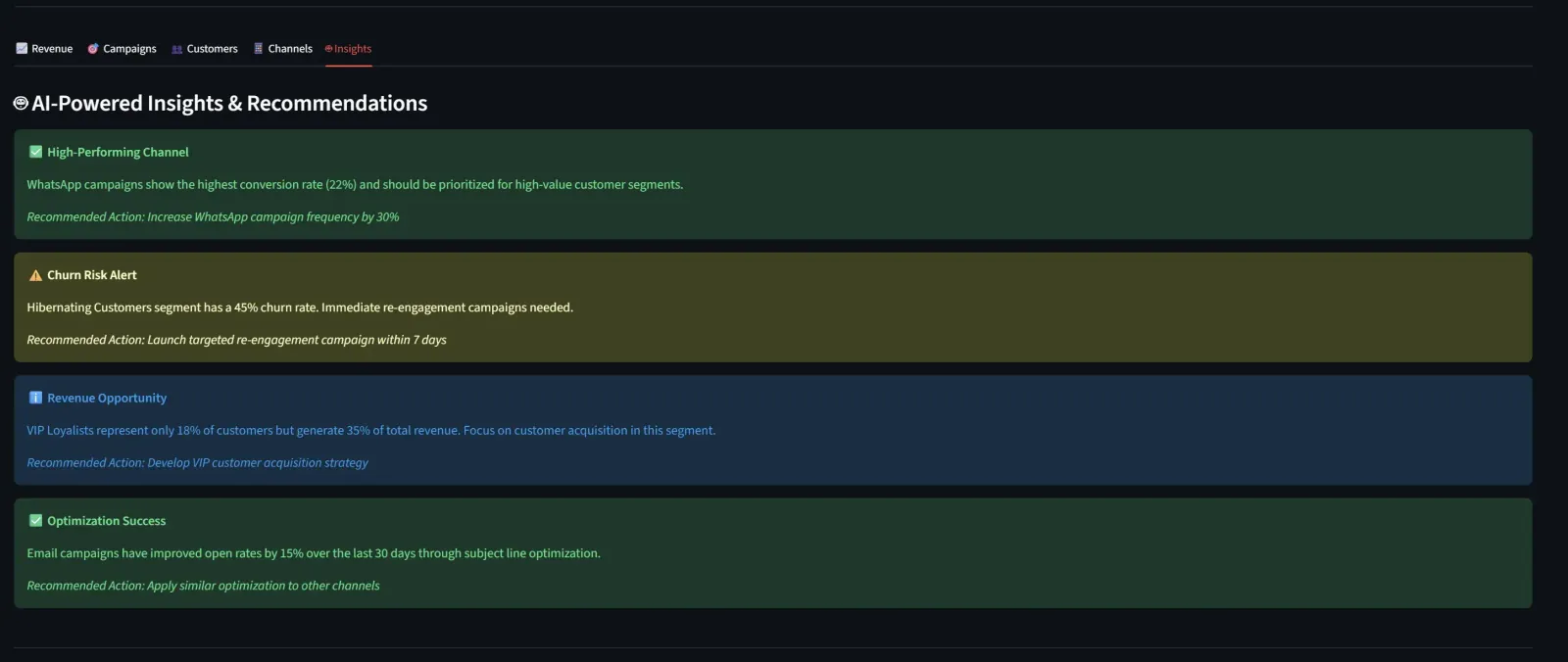
The assistant drafting a re-engagement campaign from purchase history, then segmenting customers on request
Problem
A store's customer data sits in three tools — orders and customers in Shopify, behaviour in Meta Pixel, conversions in Google Ads — and turning it into a campaign means exporting, segmenting in a spreadsheet, and writing every message by hand for every channel.
Approach
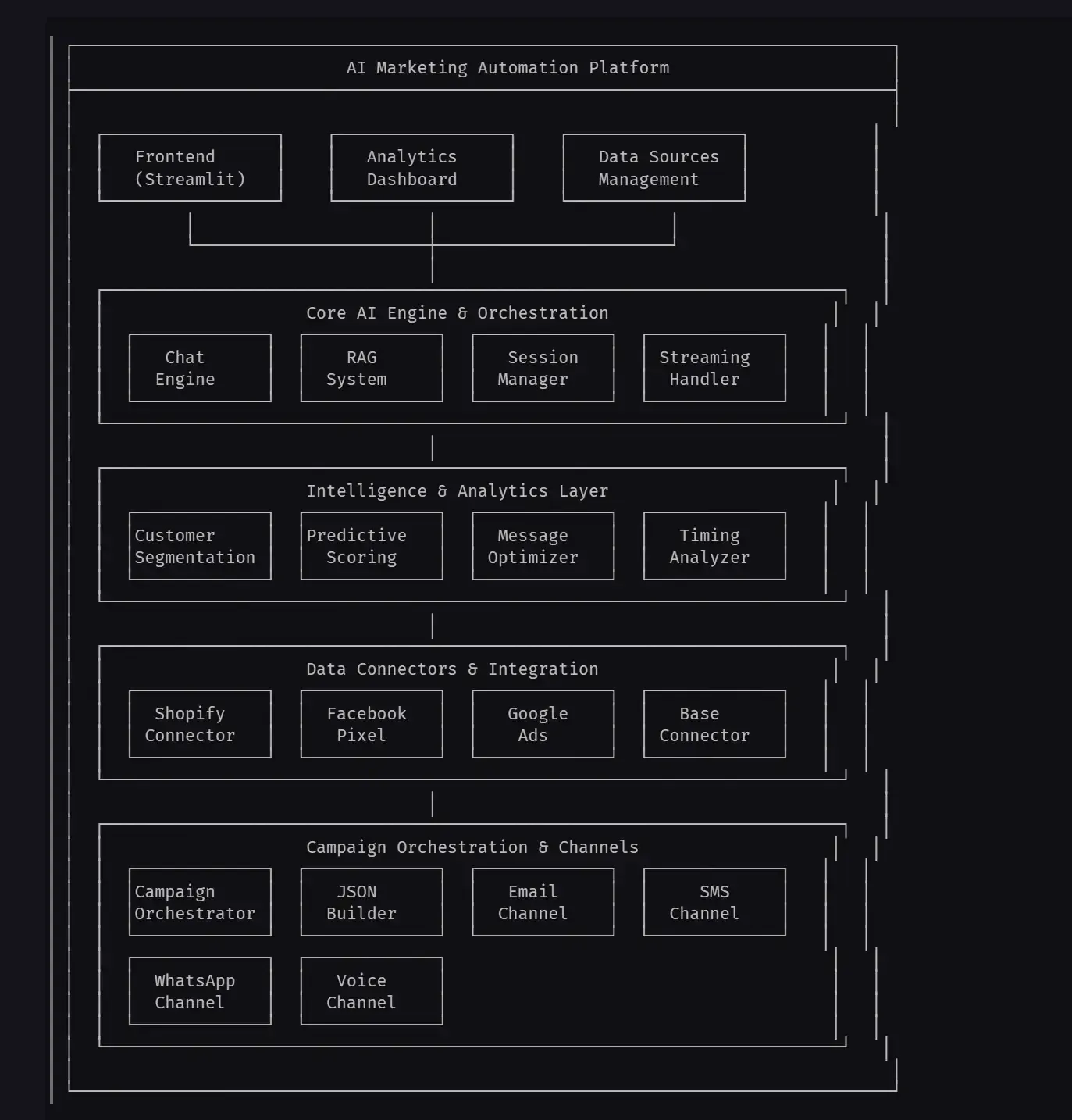
One assistant over all of it. Connectors merge the three sources into one profile per customer. Those profiles are embedded and stored for retrieval, so when you ask for a re-engagement campaign for dormant high spenders, the assistant finds those customers, retrieves what each has bought and done, and answers from that — through a model running locally.
Underneath, RFM segmentation sorts customers into six groups, lifetime-value scoring ranks them, and a timing analyser picks send windows. The orchestrator drafts the campaign for email, SMS (with opt-out and quiet hours), WhatsApp and voice as structured JSON that a sending system can schedule.
Result
The assistant, the three connectors, the segmentation and scoring, the four-channel orchestrator and an analytics dashboard, all on a local model so customer data never leaves the store's own machine. A Nodevex product; the dashboard runs on generated sample data until a store is connected.
Stack
Python with Streamlit for the interface, LangChain and ChromaDB for retrieval over sentence-transformer embeddings, and a local Qwen3 model served by Ollama — packaged with Docker alongside Redis and Postgres.