choirly AI Music Video Generator
An AI music video takes a stack of tools: one for the stills, one for motion, one for lip-sync and an editor to cut it all back to the song, each charging credits for every try.
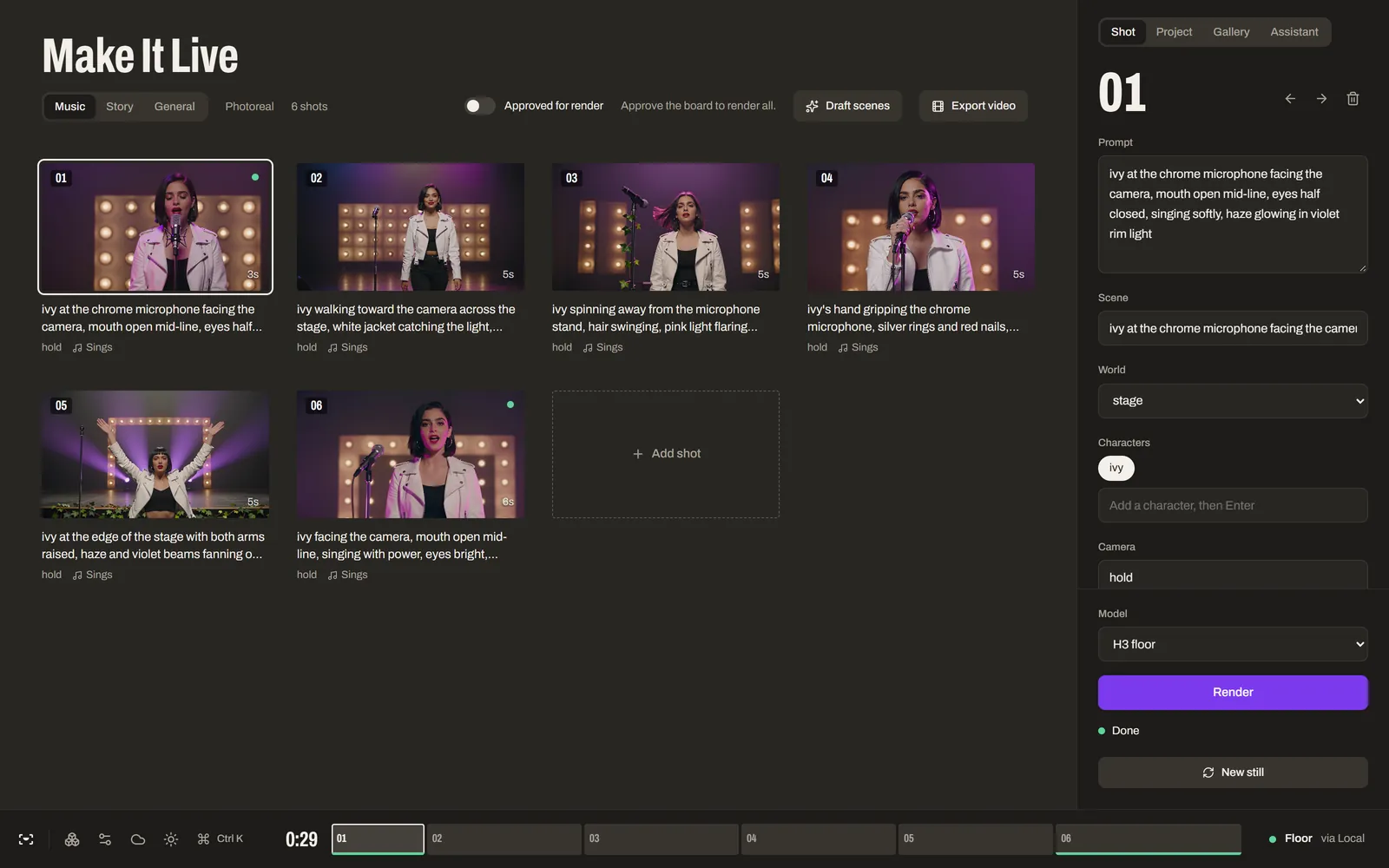
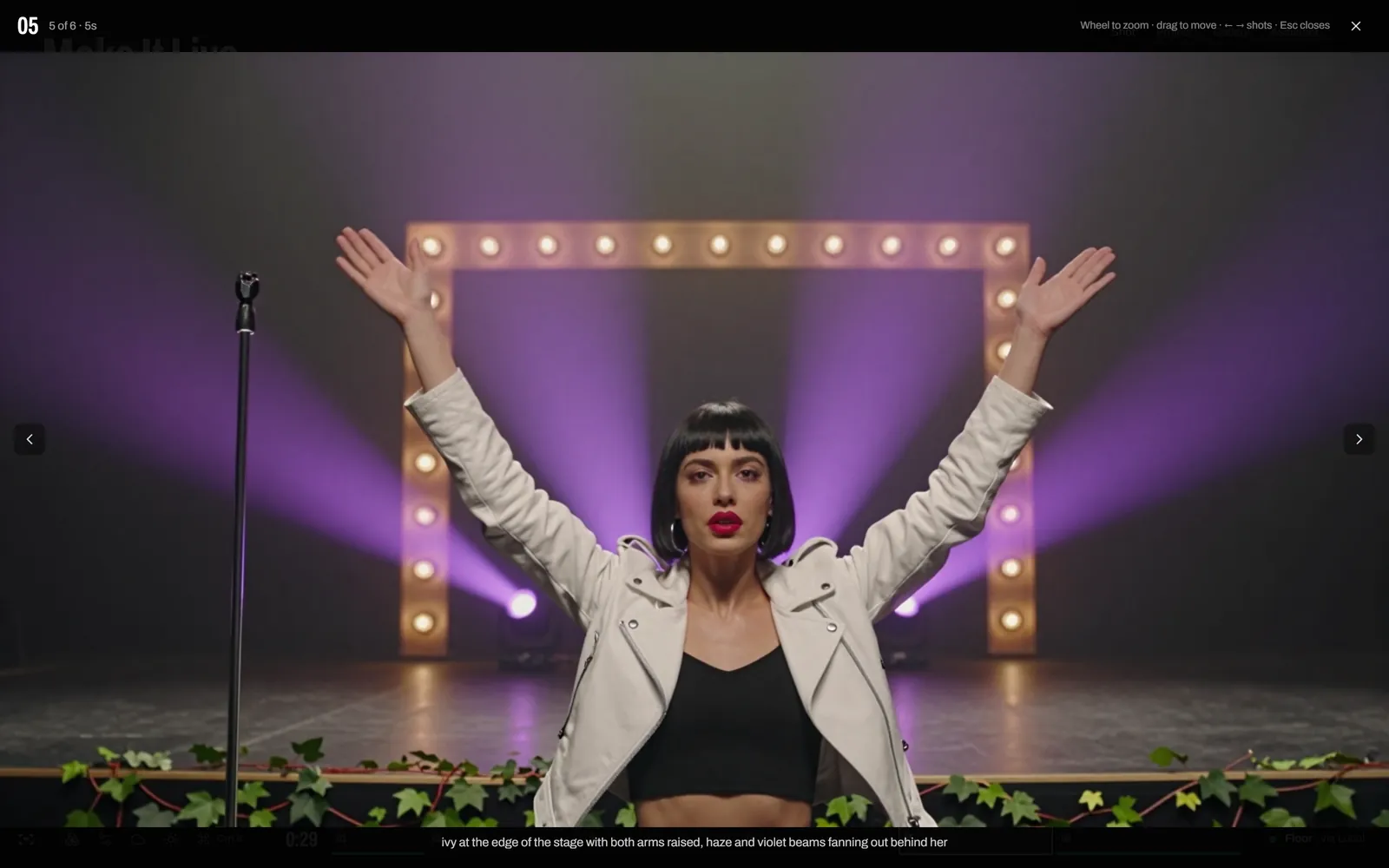
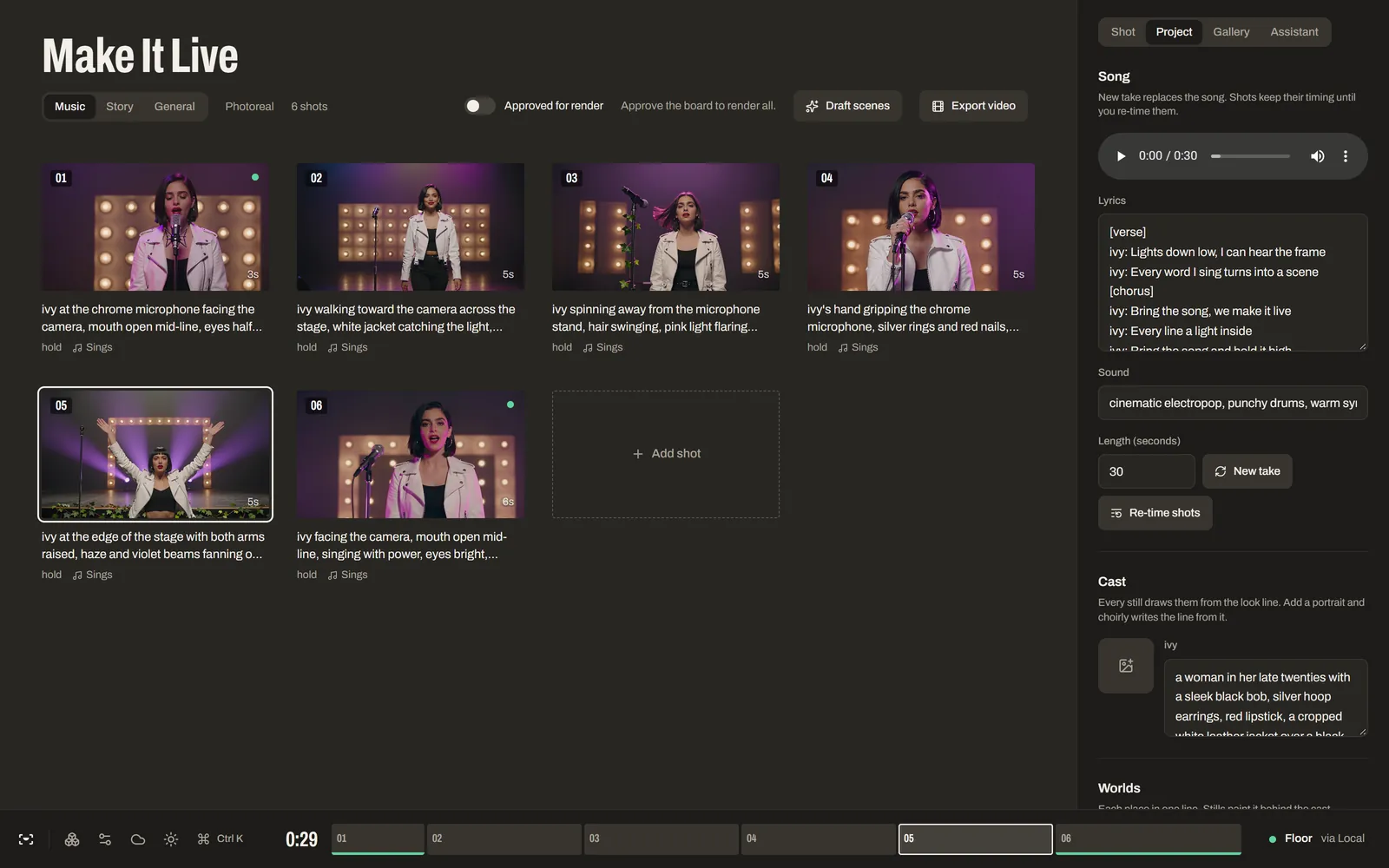
The board for a music video: six shots, one per sung line, each with its still, scene and camera
Problem
An AI music video takes a stack of tools today: one for the stills, one for motion, one for lip-sync, and an editor to cut it all back to the song. Each one bills credits for every try, so a shot that misses costs money before anyone has seen the whole video.
Approach
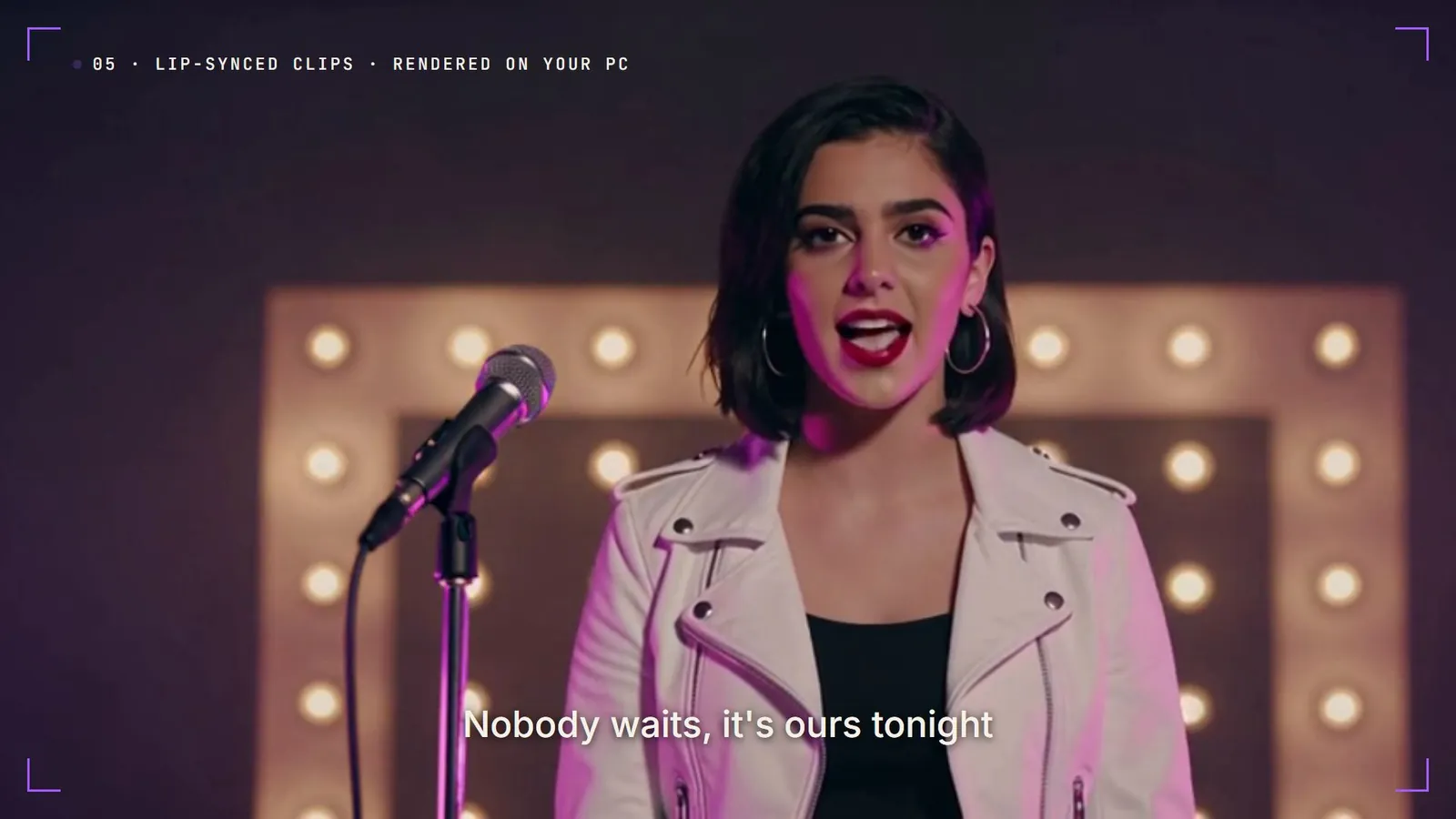
One desktop app runs the whole chain on the buyer's own GPU. The song is separated and transcribed, then split into one shot per sung line, timed to the take. A local vision model writes each scene from the lyric and the cast's looks, Z-Image draws the stills, and MiniMax H3 turns each singing shot into a clip whose mouth follows that line of the song.
The board is where the work happens: every shot has its scene, camera, world and cast, a render button, and a full-size view of its still. Approve the board and choirly renders every clip and cuts the finished video back to the track, with captions.
The installer brings its own engine. On first run it reuses the tools already on the machine or fetches pinned ones, sets up its Python environment, and picks model sizes for the card it finds.
Result
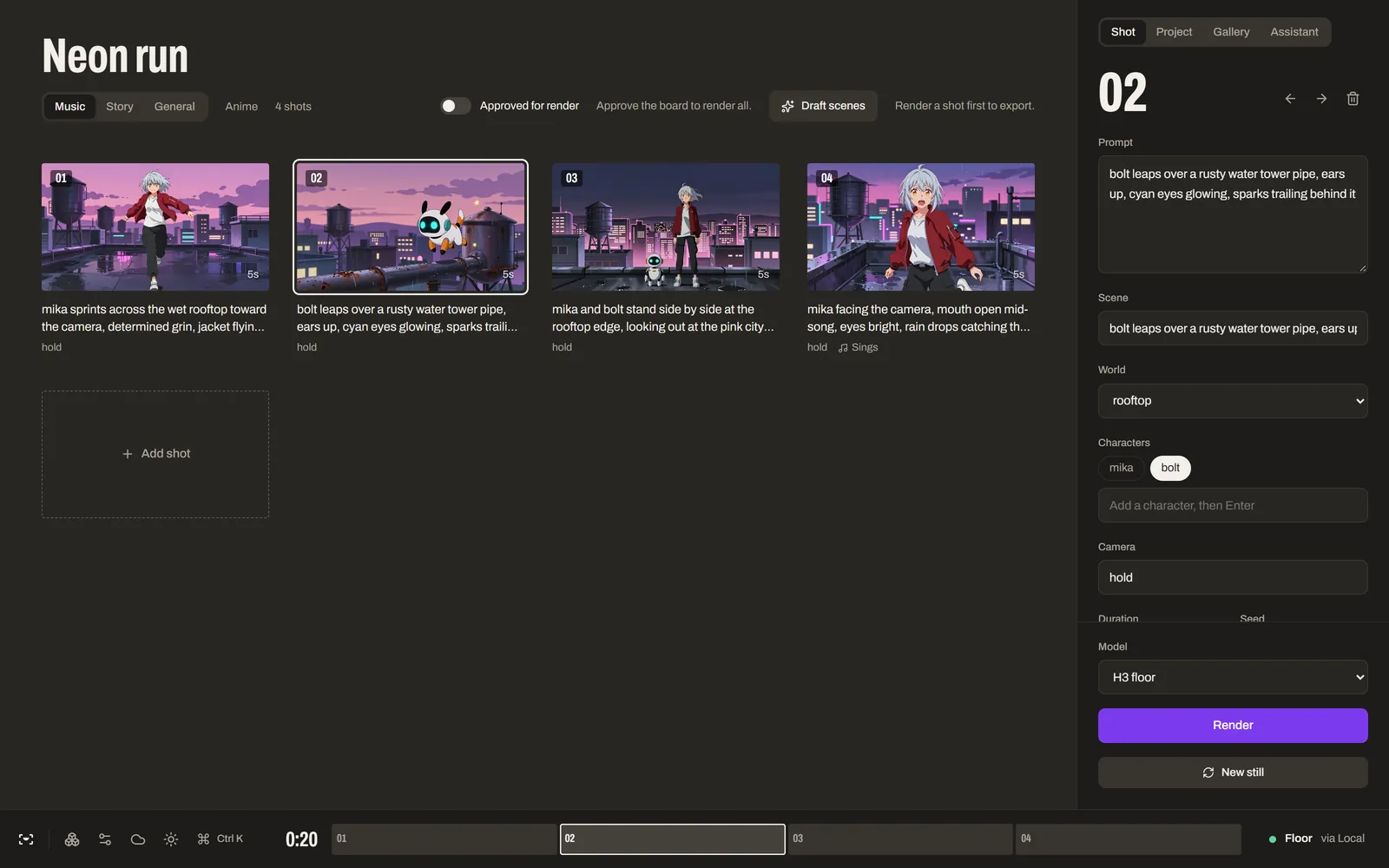
In beta with testers: a Windows installer, boards for music videos, cartoons, anime, stories and ads, and lip-synced clips rendered on an 8 GB NVIDIA card. Every frame of its trailer was made in choirly. It is a Nodevex product, not yet released.
Stack
A Tauri desktop app with a Rust core and a React interface, driving a Python engine over ComfyUI. Z-Image draws the stills, MiniMax H3 animates and lip-syncs them, and Qwen3-VL runs locally through llama.cpp to write scenes and read reference portraits.