Azpen Trading System
Signals were being read by hand across a dozen pairs, which meant the same analysis arrived late and inconsistently depending on who ran it.
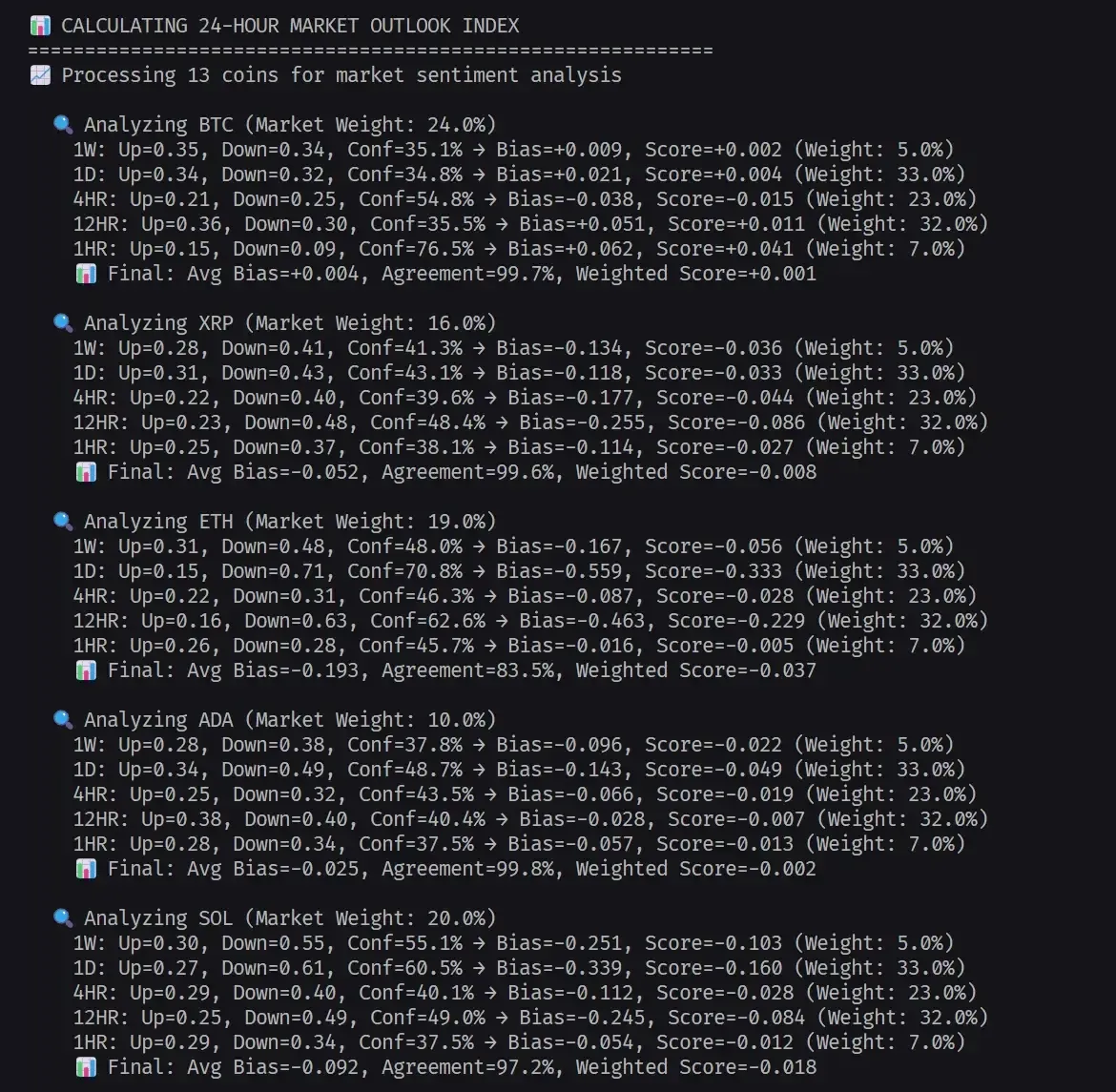
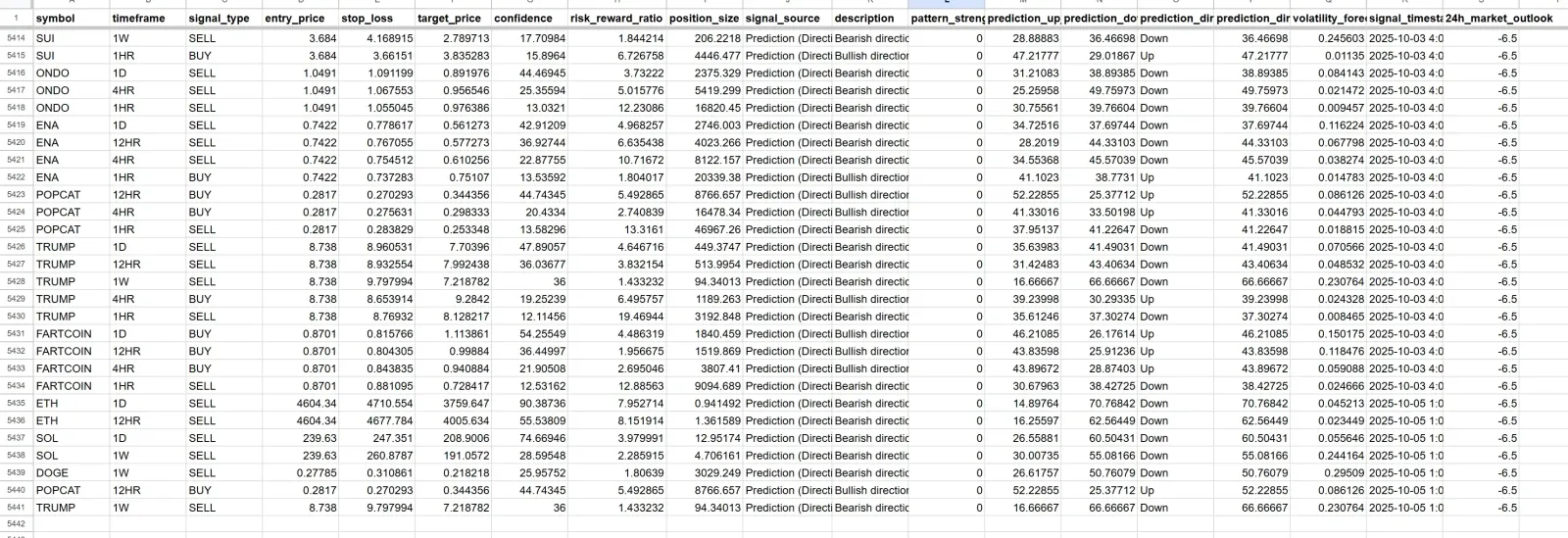
The 24-hour market outlook: each coin's up and down probabilities on five timeframes, weighted into one score
Problem
Signals were being read by hand across a dozen pairs, which meant the same analysis arrived late and inconsistently depending on who ran it.
The alternative was institutional tooling priced and built for funds running very different books — not a single desk tracking a specific mix of majors and alts around the clock.
Approach
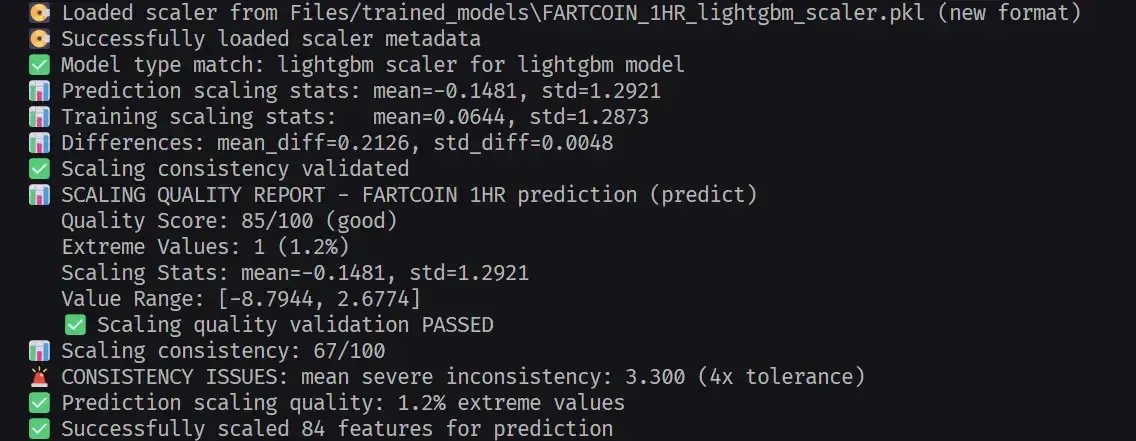
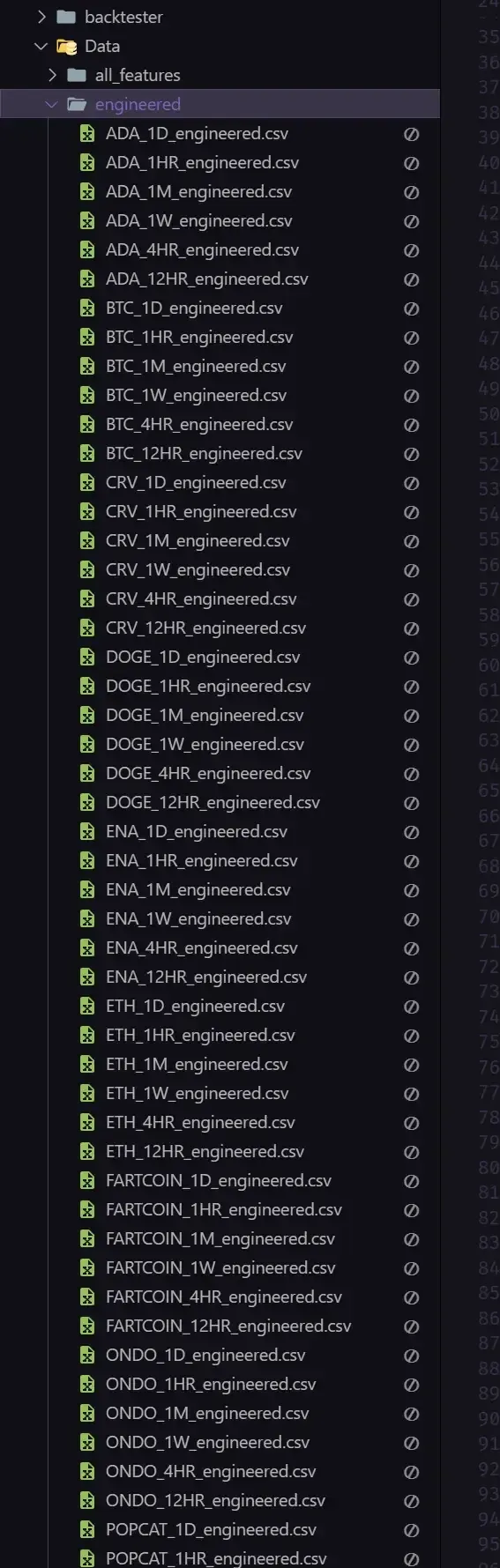
An ensemble per pair, trained on a shared feature store and retrained on a fixed schedule. Every model version is tied to the data snapshot it saw, so a result can be reproduced rather than remembered.
Underneath, an async pipeline ingests Binance spot, futures and COIN-M data alongside traditional-market feeds, building a shared bank of technical-indicator and pattern-recognition features per timeframe. A Hidden Markov Model classifies the current regime — trending, bearish, range-bound or high-volatility — and the XGBoost, LightGBM and CatBoost ensemble reweights itself accordingly rather than running one fixed model against every market condition. Every signal carries a confidence score plus entry, stop-loss and target levels, and every backtest runs against realistic slippage and fees instead of idealized fills.
Result
1,552 trained models in rotation across 12+ pairs, holding 70%+ directional accuracy on held-out evaluation. Backtests are documented, not summarized.
The system runs as production infrastructure rather than a research notebook: a live dashboard tracks open signals and confidence scores, scheduled reports summarize performance by pair and regime, and position sizing and drawdown monitoring run alongside every recommendation — at 99.9% uptime across 24/7 crypto markets.
Stack
Python drives the ensemble and feature pipeline — XGBoost, LightGBM and CatBoost weighted by regime. Postgres holds the trade, signal and model-version history; scikit-learn handles probability calibration; Airflow runs the retraining and reporting schedule; and the pipeline talks to exchange APIs directly for both market data and execution context.