INCOMPLEX Architecture Site
Renders and drawings drifted apart, so what the client approved was not quite what the documentation said.
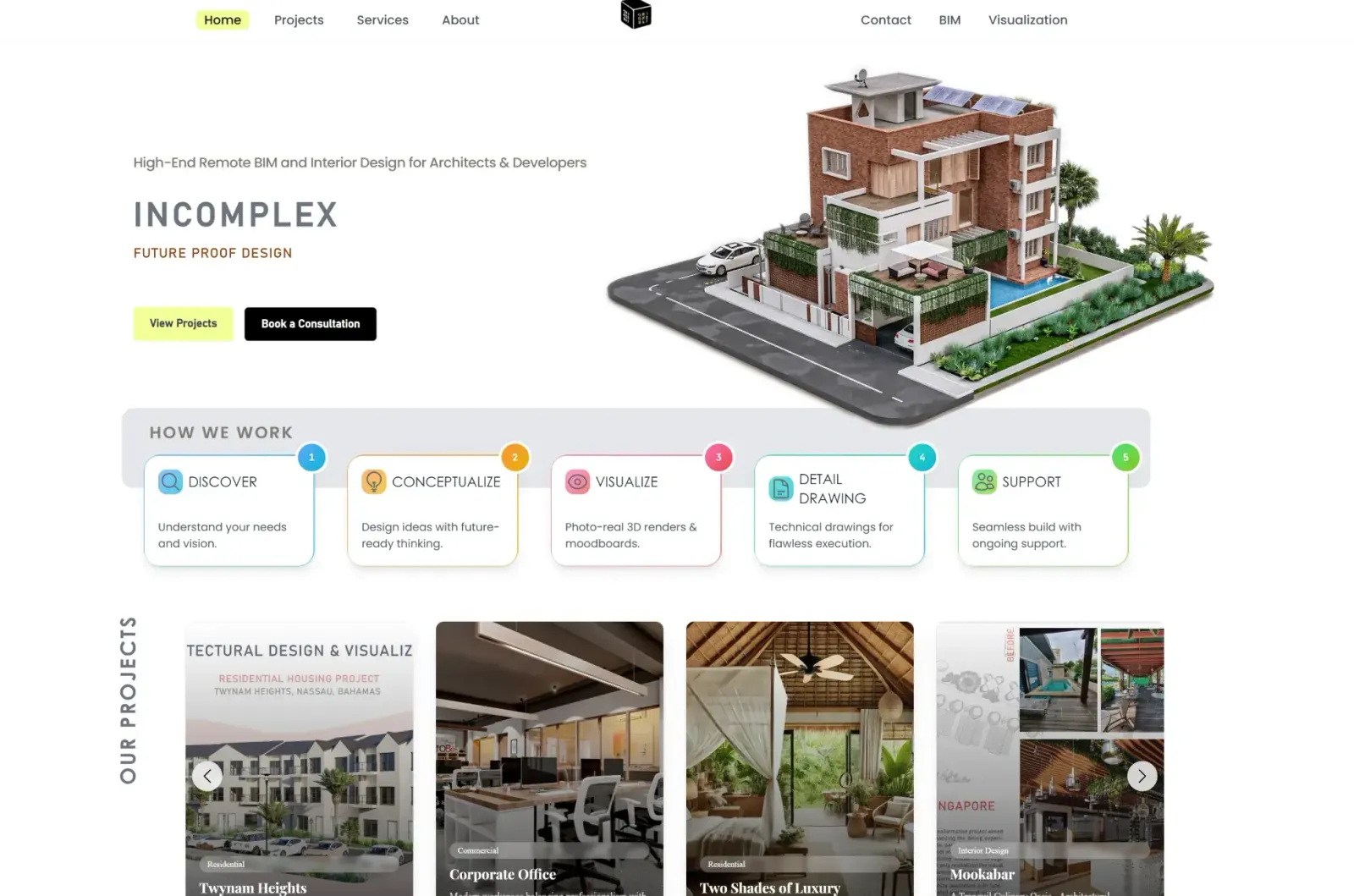
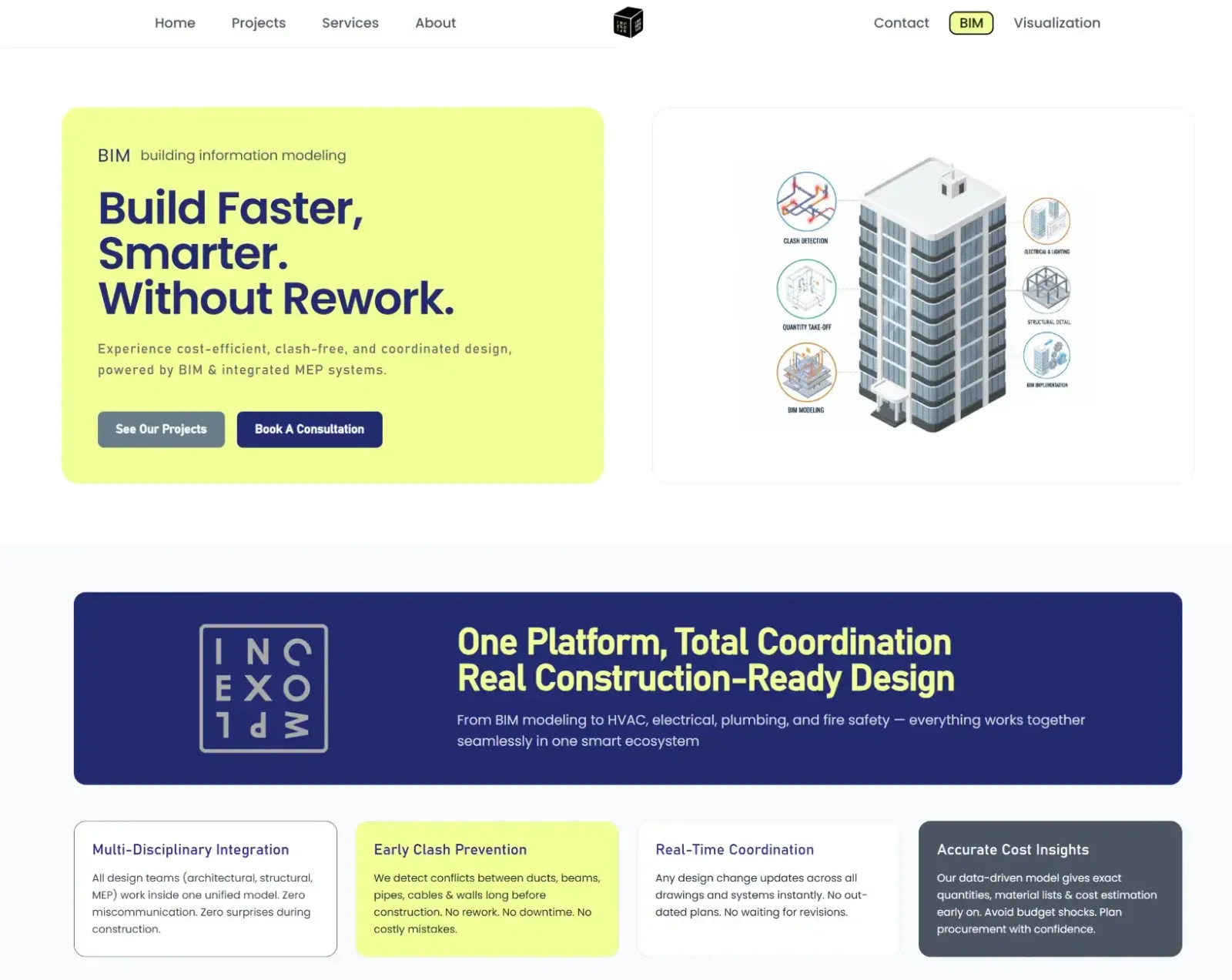
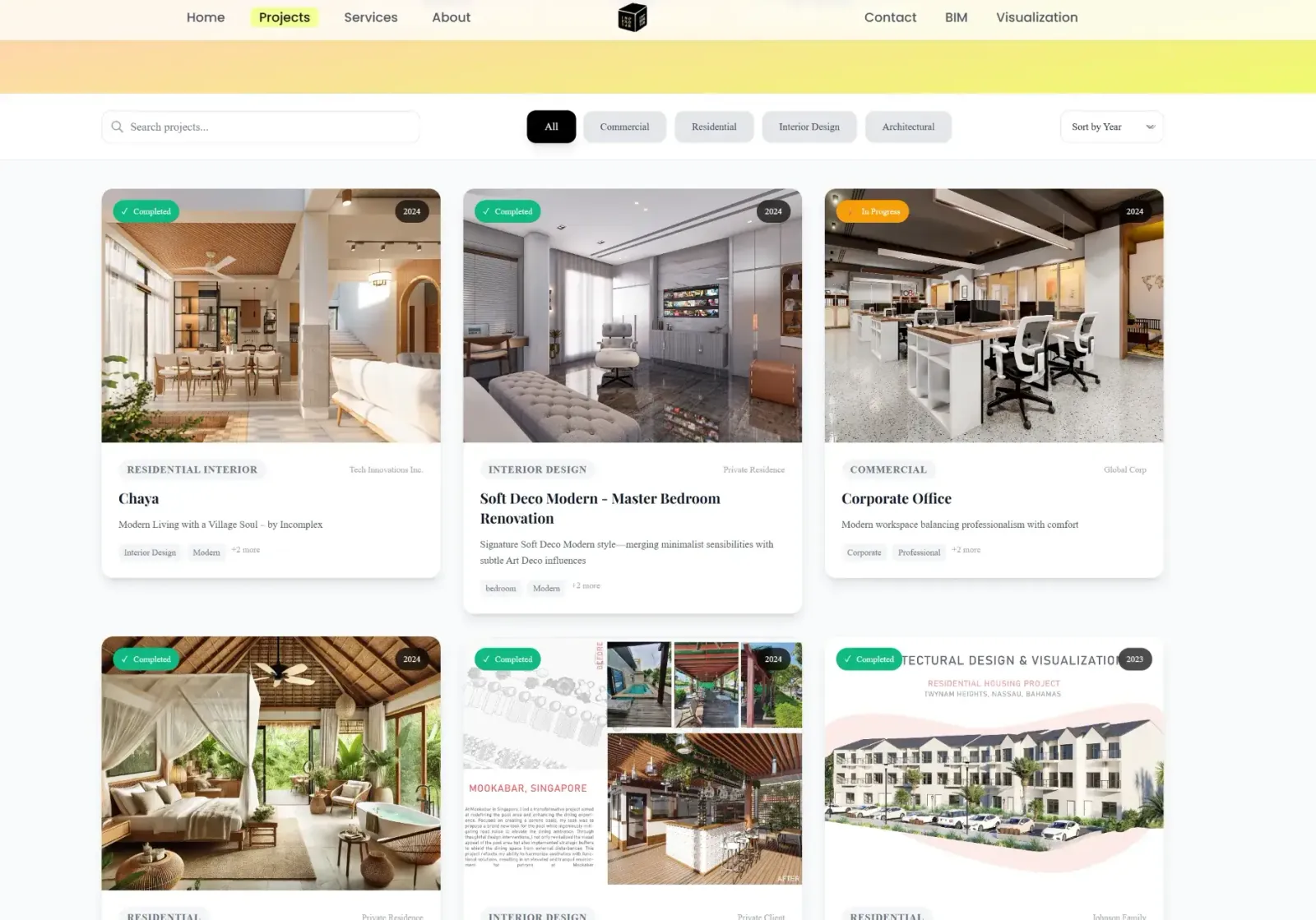
The home page
Problem
Renders and drawings drifted apart, so what the client approved was not quite what the documentation said.
A marketing render built as a separate file diverges from the working model the moment either one changes — and on a project with real design changes in flight, that gap only grows.
Approach
Visuals generated from the working model rather than a separate marketing file, with BIM coordination logging clashes against model elements and a web presentation built from the same source.
The web layer runs as a modern, server-rendered site with an interactive 3D viewer built on Three.js and React Three Fiber, loading model exports directly rather than pre-baked images — so a visitor can orbit a render sourced from the same file the BIM coordination and drawing set are checked against. Portfolio updates go through a lightweight content-management layer rather than a developer, and the site itself is server-rendered for search visibility and fast loads on mobile, where most portfolio browsing happens.
Result
One source for the render, the sheet and the site, so approvals and documentation stay in agreement.
Because the 3D viewer and the coordination model share an origin, a change made once propagates to the drawing set, the presentation renders and the website's interactive views together — nothing needs to be redone in a second tool to stay current.
Stack
Revit and BIM coordination in Navisworks keep the model, clash detection and drawing set in agreement; Blender handles high-fidelity marketing renders sourced from that same model; and the public site runs on Next.js with a WebGL/Three.js viewer so visitors can explore the model directly rather than a fixed image of it.